
Primary Antibody Matched Pairs

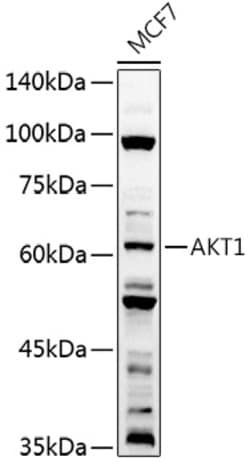
ABclonal Technology AKT1 Rabbit pAb

This gene encodes one of three AKT serine-threonine protein kinases (AKT1, AKT2, AKT3), which share a pleckstrin homology domain, a kinase domain, and a regulatory C-terminal domain. AKT proteins are phosphorylated by phosphoinositide 3-kinase (PI3K) and play a crucial role in cell signaling pathways activated by membrane-bound ligands. They regulate cellular functions like proliferation, survival, metabolism, and angiogenesis in both normal and cancerous cells. AKT proteins are recruited to the cell membrane by PIP3, and their activation requires phosphorylation at specific residues. The PI3K/AKT pathway is vital for tumor cell survival and is involved in the mTOR pathway, which regulates protein synthesis. Mutations in this gene are linked to various cancers, including breast, colorectal, and ovarian cancers, as well as disorders like Proteus and Cowden syndromes. Several spliced transcript variants exist for this gene.

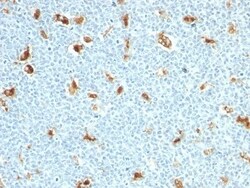
Biotium S100A9(S100A9/1011), 0.2mg/mL
Recognizes a 14 kDa protein, identified as S100A9 (also known as Calgranulin B or MRP-14); expressed by granulocytes, monocytes and by tissue macrophages.The protein encoded by this gene is a member of the S100 family of proteins containing 2 EF-hand calcium-binding motifs. S100 proteins are localized in the cytoplasm and/or nucleus of a wide range of cells, and involved in the regulation of a number of cellular processes such as cell cycle progression and differentiation. Altered expression of this protein is associated with the disease cystic fibrosis. This MAb reacts with neutrophils, monocytes and macrophages, and has been shown as an important marker for identifying macrophages in tissue sections. Among cells that are now recognized as macrophages are histiocytes, Kupffer cells, osteoclasts, microglial cells, synovial type A cells, interdigitating cells, and Langerhans cells (in normal tissues) and epithelioid cells and Langerhans-type and foreign-body-type multinucleate

Genscript Corporation FGL1 Fc Chimera Human
FGL1 (Fibrinogen-like protein 1) also known as hepatocyte-derived fibrinogen-related protein 1 (HFREP-1) HP-041 hepassocin (HPS) and liver fibrinogen-related protein 1 (LFIRE-1) is a liver-specific secreted protein belonging to the fibrinogen superfamily whose members share a fibrinogen domain at their C-termini FGL1 is an immune suppressive molecule that inhibits the activation of antigen-specific T cells by acting as a major ligand of LAG3 and binds LAG3 independently of MHC class II

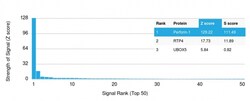
Biotium Perforin-1 (Pore Forming Protein) (Apoptosis Marker)(PRF1/2467), 0.2mg/mL
Perforin is a pore-forming protein that leads to osmotic lysis of the target cells and subsequently enables granzymes to enter the target cells and activate apoptosis. Perforin has structural and functional similarities to complement component 9 (C9). Like C9, this protein creates transmembrane tubules and is capable of lysing non-specifically a variety of target cells. It is one of the main cytolytic proteins of cytolytic granules, and is known to be a key effector molecule for T-cell- and natural killer-cell-mediated cytolysis. Defects in this gene cause familial hemophagocytic lymphohistiocytosis type 2 (HPLH2), a rare and lethal autosomal recessive disorder of early childhood. The expression of perforin is reportedly upregulated in activated CD8 T-cells, natural killer cells and some CD4 T-cells. Primary antibodies are available purified, or with a selection of fluorescent CF Dyes and other labels. CF Dyes offer exceptional brightness and photostability. Note: Conjug
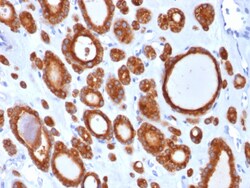
Biotium TPO (Thyroid Peroxidase) (Thyroid Marker)(TPO/1921), CF740 conjugate, 0.1mg/mL
Thyroperoxidase (TPO) is a 933 amino acid, type I transmembrane glycoprotein that plays a key role in thyroid gland function and autoimmunity. It is present as a dimer on the apical surface of thyroid follicular cells. TPO functions in the iodination of tyrosine residues in thyroglobulin and phenoxy-ester formation between pairs of iodinated tyrosines to generate the thyroid hormones, thyroxine and triiodothyronine. Mutations in this gene are associated with several disorders of thyroid hormonogenesis, including congenital hypothyroidism, congenital goiter, and thyroid hormone organification defect IIA. Malignant thyroid tumors exhibit an anomaly in TPO resulting in lower affinity for anti-TPO. This antibody may aid in the differentiation between benign and malignant thyroid tumors. Primary antibodies are available purified, or with a selection of fluorescent CF Dyes and other labels. CF Dyes offer exceptional brightness and photostability. Note: Conjugates of blue fluores
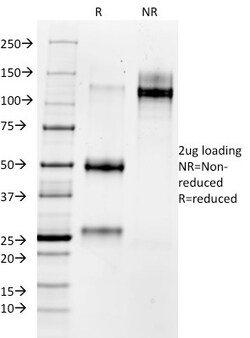
Biotium MMP3 (Marker of Metastasis and Rheumatoid Arthritis)(MMP3/1730), 0.2mg/mL
The matrix metalloproteinases (MMP) are a family of peptidase enzymes responsible for the degradation of extracellular matrix components, including collagen, gelatin, fibronectin, laminin and proteoglycan. Transcription of MMP genes is differentially activated by phorbol ester, lipopolysaccharide (LPS) or staphylococcal enterotoxin B (SEB). MMP catalysis requires both calcium and zinc. MMP-3, MMP-10 and MMP-11 (also designated stromelysin-1, 2 and 3, respectively) activate procollagenase. MMP-3 activation of procollagenase can occur via two pathways. Direct activation by MMP-3 is slow and activation by MMP-3 in conjunction with tissue or plasma proteinases is rapid. MMP-10 is expressed in small intestine, and at lower levels in lung and heart. MMP-11 is specifically expressed in stromal cells of breast carcinomas and contributes to epithelial cell malignancies. Primary antibodies are available purified, or with a selection of fluorescent CF Dyes and other labels. CF Dyes of
AdipoGen IL-36gamma (human) Matched Pair Detection Set (1 Set)
Matched Pair Detection Set. Detects human IL-36gamma in cell culture supernatant. Colorimetric assay. Sample Type: Cell Culture Supernatant. Range: 3.9 to 250pg/ml. Sensitivity: 1pg/ml. IL-36alpha (IL-1F6), IL-36beta (IL-1F8) and IL-36gamma (IL-1F9) bind to IL-36R (IL-1Rrp2) and IL-1RAcP, activating similar intracellular signals as IL-1. IL-36Ra inhibits the production of proinflammatory cytokines, including IL-12, IL-1beta, IL-6, TNF-alpha and IL-23 induced by IL-36 in BMDC and CD4 T cells. Skin and dendritic cells are targets of the IL-36 interleukins leading to a Th1 response. These cytokines may represent potential targets for immune-mediated inflammatory conditions or, alternatively, could be used as adjuvants in vaccination.
AdipoGen Asprosin (human) Matched Pair Detection Set (1 Set)
Matched Pair Detection Set. Detects human Asprosin in cell culture supernatant. Assay Type: Sandwich. Detection Type: Colorimetric. Sample Type: Cell Culture Supernatant. Range: 0.156 to 10ng/nl. Sensitivity: 150pg/ml. Asprosin is a new fasting-induced protein hormone that targets the liver to increase plasma glucose levels. Asprosin is the C-terminal cleavage product of the protein fibrillin-1. Asprosin is secreted from white adipose tissue and increases hepatic glucose production by using cAMP as a second messenger, leading to activation of protein kinase A in the liver. Reduction of asprosin levels protect against metabolic syndrome-associated hyperinsulinism.
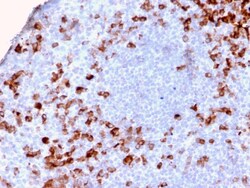
Biotium Human Kappa Light Chain / IGKC (B-Cell Marker)(KLC2886R), CF594 conjugate, 0.1mg/mL
This MAb is specific to kappa light chain of immunoglobulin and shows no cross-reaction with lambda light chain or any of the five heavy chains. It recognizes human Ig kappa light chains of both secreted and cell surface immunoglobulin. It detects also free kappa light chains. In mammals, the two light chains in an antibody are always identical, with only one type of light chain, kappa or lambda. The ratio of Kappa to Lambda is 70:30. However, with the occurrence of multiple myeloma or other B-cell malignancies this ratio is disturbed. Antibody to the kappa light chain is reportedly useful in the identification of leukemias, plasmacytomas, and certain non-Hodgkin's lymphomas. Demonstration of clonality in lymphoid infiltrates indicates that the infiltrate is malignant. Primary antibodies are available purified, or with a selection of fluorescent CF Dyes and other labels. CF Dyes offer exceptional brightness and photostability. Note: Conjugates of blue fluorescent dyes like
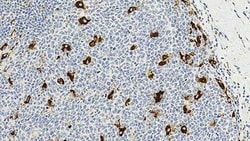
Leica Biosystems 1ML NCL-L-CD68
Antigen Background The CD68 molecule is a 110 kD intracellular glycoprotein primarily reported to be associated with cytoplasmic granules and to a lesser extent the membranes of macrophages. Markers to CD68 antigen are the most frequently used for the identification of macrophages in immunohistochemistry; however, CD68 is also found in monocytes, neutrophils, basophils and large lymphocytes. The function of the CD68 molecule is not certain but these lysosomal membrane proteins are major components and may protect the membranes from attack by acid hydrolases. It is unclear if the surface-associated CD68 protein is functionally significant or due to leakage from the lysosomes. CD68 protein expression has been demonstrated in stimulated T cells and NK cells and non-hematopoietic tissues such as liver and renal tubules.
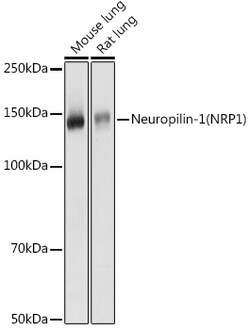
ABclonal Technology Neuropilin-1 (NRP1) Rabbit pAb
This gene encodes one of two neuropilins, which contain specific protein domains which allow them to participate in several different types of signaling pathways that control cell migration. Neuropilins contain a large N-terminal extracellular domain, made up of complement-binding, coagulation factor V/VIII, and meprin domains. These proteins also contains a short membrane-spanning domain and a small cytoplasmic domain. Neuropilins bind many ligands and various types of co-receptors, they affect cell survival, migration, and attraction. Some of the ligands and co-receptors bound by neuropilins are vascular endothelial growth factor (VEGF) and semaphorin family members. This protein has also been determined to act as a co-receptor for SARS-CoV-2 (which causes COVID-19) to infect host cells.
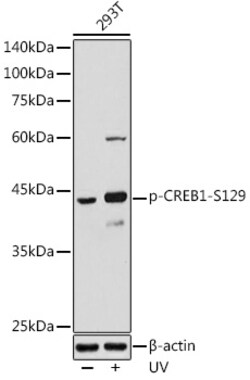
ABclonal Technology Phospho-CREB1-S129 Rabbit pAb
This gene encodes a transcription factor that is a member of the leucine zipper family of DNA binding proteins. This protein binds as a homodimer to the cAMP-responsive element, an octameric palindrome. The protein is phosphorylated by several protein kinases, and induces transcription of genes in response to hormonal stimulation of the cAMP pathway. Alternate splicing of this gene results in several transcript variants encoding different isoforms.
ABclonal Technology PSAP
This gene encodes an enzyme that catalyzes the conversion of orthophosphoric monoester to alcohol and orthophosphate It is synthesized under androgen regulation and is secreted by the epithelial cells of the prostate gland An alternatively spliced transcript variant encoding a longer isoform has been found for this gene This isoform contains a transmembrane domain and is localized in the plasma membrane-endosomal-lysosomal pathway
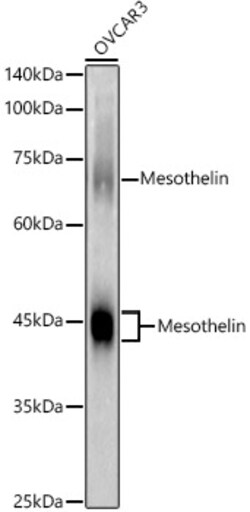
ABclonal Technology Mesothelin Rabbit pAb
This gene encodes a preproprotein that is proteolytically processed to generate two protein products, megakaryocyte potentiating factor and mesothelin. Megakaryocyte potentiating factor functions as a cytokine that can stimulate colony formation of bone marrow megakaryocytes. Mesothelin is a glycosylphosphatidylinositol-anchored cell-surface protein that may function as a cell adhesion protein. This protein is overexpressed in epithelial mesotheliomas, ovarian cancers and in specific squamous cell carcinomas. Alternative splicing results in multiple transcript variants, at least one of which encodes an isoform that is proteolytically processed.